15 Apr 2026
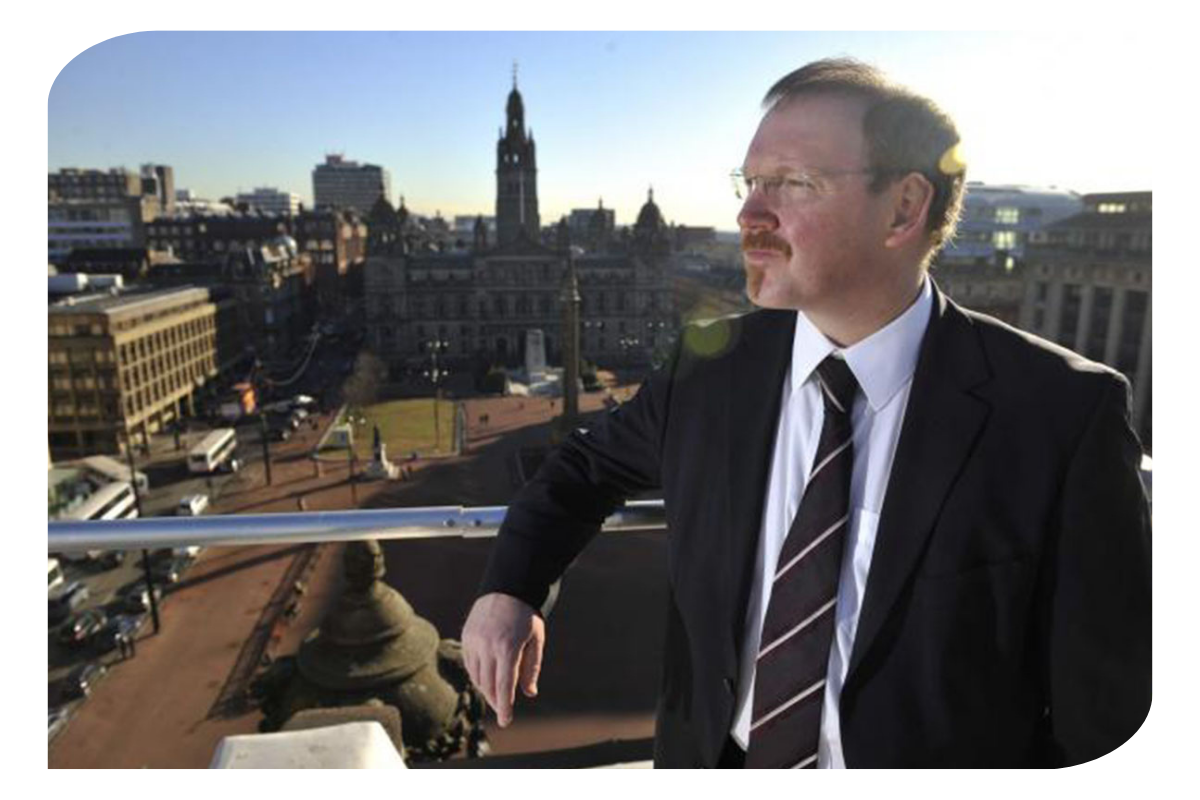
By Stuart Patrick, Chief Executive, Glasgow Chamber of Commerce
Glasgow City Centre has been attracting more than its fair share of criticism lately. Admittedly, that is not without cause. But there are reasons to be more optimistic for the future.
Since the Glasgow Chamber of Commerce office overlooks George Square, we have an excellent view of the Square’s renovation. The work began almost exactly one year ago and has caused us far less daily disruption than we had feared. With new trees planted recently and the cobbles being laid on the Square’s north side, the August completion deadline is beginning to look achievable.
But the Square is just one of a dozen projects being delivered to improve the city centre’s streetscape. Of these projects, seven - including Cowcaddens Road, Dobbie’s Loan and Argyle Street West - are under construction and due to complete this year. Argyle Street East, Clyde Street and High Street are among five more that are yet to start.
Having so much investment happening at once was always going to make it difficult for businesses operating in the centre and that is exactly what our members are telling us. The disastrous Union Corner fire, a major sewer collapse on Cathedral Street and the endless repairs of the M8 have all added to the disruption. Is it any wonder that Silverburn shopping centre reported last year as its best ever? The streetscape projects are an investment. They will be completed and they will help make the city centre a more attractive destination in the years ahead. But on their own, they will not be enough to lift city centre fortunes.
Our city centre’s current condition is a top concern for Chamber members. It is also the main reason the Chamber began the process to establish a new Business Improvement District. The BID secured an overwhelmingly positive vote from eligible businesses and officially began work on 1 April. Led by the voting businesses the BID will have over £14m to invest in the centre’s cleanliness, safety and vitality over the next five years. The crucial principle involved is that the investment must be additional to existing Council services. It cannot be used to replace them.
The BID is just one reason to be more optimistic. Perhaps the most significant was the passing of the Scottish Government’s Housing Act which settled the debate on the role of housing rent controls. The decision to exempt Build to Rent (BTR) housing promises to have the greatest impact on the city centre.
In its winter report on residential development for six big UK cities outside London, property advisory firm JLL noted that since 2022, all funding for BTR housing in Scotland stopped. Around 8,000 planned units stalled. Now JLL believes the Housing Act will put Scotland back into property investors’ minds. For Glasgow JLL said ‘pent-up demand can finally be unlocked’ and we should see cranes re-appearing on the city skyline.
So much of the financial clout supporting the redevelopment of Manchester’s city centre has gone into residential investment in BTR. Without a comparable BTR market, Glasgow has been forced to rely mainly on student accommodation as the only financially attractive investment. Perhaps the most important is the Vita Group’s proposal for the former ABC cinema site on Sauchiehall Street, which the Scottish Government called in for review after the Council granted planning permission. We are waiting for the government’s decision on what is one of the most challenging sites involved in tackling Sauchiehall Street’s frustrating decline.
Some student investment was needed but that little else has been coming forward may now begin to shift. Together with the City Council’s helpful new policy on tall buildings, the Housing Act should release a fresh phase of housing investment, making it much easier to achieve the agreed target of doubling the city centre’s residential population. Indeed, in its most recent edition of the Top UK Residential Investment Cities Report, advisory firm Colliers argues that Glasgow is now the most attractive spot in the UK.
Other developments will also be significant. The Union Corner fire has injected an urgency into work to improve the neighbourhood surrounding Central Station. We are genuinely encouraged that a mix of national and local organisations are being involved in the Union Street Recovery Group and that Council Leader Susan Aitken is making such a visible commitment to change.
Several other investments can add momentum to city centre recovery. The recently approved hotel plans for the former Watt Bros site on Sauchiehall Street, the revised scheme for the refurbishment of Buchanan Galleries, the redevelopment of the former Clydesdale Bank HQ on St Vincent Place for the Ivy Restaurant Group – these are all examples of renewed interest in the city centre. Doubtlessly, improving demand for Grade A office space should also help unlock future office investment in the city centre too.
Property experts Savills issued a fascinating report on the vibrancy of Glasgow City Centre’s hospitality sector in 2025. It describes a record year for the opening of new food and beverage businesses. This is despite almost every government policy – including increased Employers’ NIC, crazy examples of rates revaluations and expensive energy pricing - all making it progressively more difficult to operate a successful business. How much more impact would the sector have if national governments genuinely delivered on their promises to put economic growth first?
It was a great relief that city centre footfall bounced back to the levels seen just before the Union Corner fire as soon as Central Station fully reopened. However, footfall still remains up to 15% below pre-pandemic levels. Growing the centre’s residential population will certainly help over the long term, but there are also government decisions that could help draw back demand from customers across the city region. Let’s not choose the bizarre Transport Scotland option to close the M8 as they struggle with their Woodside viaduct repairs. Let’s not introduce city-wide congestion charges that will only drive more business to Edinburgh. And let’s turbo charge the delivery of the Clyde Metro.
We all need Glasgow City Centre to succeed. Despite all its travails, it remains the largest economic hub in the country. We are enduring a difficult period in its life but there are good reasons to work even harder to support its recovery.
This article was first published in The Herald on Wednesday 15 April 2026